
When it comes to cooking curry, it can seem like a daunting task. The flavours are complex and layered, the techniques may be unfamiliar to those who primarily cook Western cuisine, and the list of ingredients can seem endless. However, don't let the perception of cooking curry scare you. While it is true that there are certain techniques and ingredients that are essential for creating a delicious curry, it is not as complicated as it may seem. In fact, with a little bit of knowledge and understanding, anyone can confidently cook curry at home. In this article, we will break down the basics of curry and provide you with the foundation you need to start experimenting and creating your own mouthwatering dishes, as well as a recipe for a simple chickpea vegetable curry that everyone will love.
Jump to:
Is Curry Spicy?
Contrary to popular belief, not all curries are spicy. While it is true that some curries can pack a punch of heat, others have much more subtle and nuanced flavours. The heat level of a curry is often determined by the type and amount of spices and chili peppers used, as well as the personal preferences of the person preparing the dish.
It is important to note that when you are cooking curry at home, you have complete control over the level of spice in your dish. If you prefer a milder curry, you can simply use fewer chili peppers or omit them altogether. On the other hand, if you enjoy a spicier curry, you can increase the amount of chili peppers. The choice is entirely up to you, so don't be afraid to experiment and find the perfect balance of flavours for your taste buds.
While some curries may be spicy, it is not a defining characteristic of all curries. You have the power to create a curry that is as mild or as spicy as you like, so don't be afraid to tailor the dish to your own personal preferences.
Where to Begin
Most, if not all, curries start with the same base: ginger, garlic, and onion finely chopped. The ratio I use for this mixture is two parts onion to one part ginger and one part garlic (1 medium-sized onion, 4-5 cloves of garlic, a thumb-sized piece of ginger). Often green chillies will be added to this mixture as well. Consider this mixture as one ingredient rather than three because it is such a common combination.
Sauté the onion, ginger, and garlic in a considerable amount of fat. The amount of fat you use depends on a lot of things. I suggest adding as much as you think, then doubling it. This is one of those things that separates curry from typical Western cooking, and it really is the foundation of good food when it comes to building flavour.
Generally, in western cooking, a cook would use a maximum of 1-2 teaspoon of oil. Someone cooking curry may use as much as a ¼ c. We will get into the reason why a little bit later, but this is one of those counterintuitive things I mentioned earlier. The type of oil used is usually different, as well. Depending on where in the world your curry is coming from, the fat used could be ghee (clarified butter), coconut oil, palm oil, or countless other types. When sautéing the onion, ginger, garlic mixture, I prefer moderate heat. Heat any higher, and the risk of burning is too high. Make sure you preheat your pan properly before adding the oil.
Curry Spices

Now that you have a better understanding of how to build the foundation for a curry, let's talk about the spices. One of the defining characteristics of a curry is the abundance of spices used to create vibrant and impactful flavours. In contrast to western cuisine, which often uses a smaller number of spices, curry relies on a generous amount of spices to bring depth and complexity to the dish.
To add the spices to your curry, start by heating the oil in a pan and then adding the ginger, garlic, and onions. Allow the vegetables to cook for 1-2 minutes until they are fragrant and soft. Then, add the spices and cook for an additional 1-2 minutes, allowing them to open up and release their natural oils. This is an important step, as it helps to bring out the full flavour of the spices and create a deeper, more complex curry.
It is important to note that the spices will absorb the oil if there is not enough present, and they can burn if the oil is too hot. Therefore, it is crucial to pay attention to the temperature of the oil and add enough to ensure that the spices do not burn. By following these steps, you can create a curry that is bursting with flavour and depth.
Common Curry Spices
If you are new to making curry, it helps to know which spices you will encounter most often. Here are the essential spices to keep in your pantry:
- Cumin -- earthy and warm, used in almost every curry
- Coriander -- slightly citrusy, pairs beautifully with cumin
- Turmeric -- gives curry its signature golden colour and subtle bitterness
- Cardamom -- aromatic and slightly sweet, essential in garam masala
- Cinnamon -- adds warmth and a touch of sweetness
- Cayenne or chili powder -- controls the heat level
- Garam masala -- a pre-made blend that can be used on its own or added at the end for extra depth
The beauty of curry is that once you understand how these spices work together, you can adjust the proportions to create something uniquely yours. Start with small amounts and build up as you gain confidence.
Curry Powder Recipe

When it comes to adding spices to your curry, you have a few options to choose from. One popular choice is curry powder, which is actually a British invention and not necessarily authentic to Indian cuisine. While curry powder can be used to make some tasty Indian dishes by adding additional spices, it is not the only option and should not be thought of as the be-all and end-all of making curry.
An alternative to curry powder is a spice blend called garam masala, which is more commonly used in authentic Indian cooking. Garam masala is a blend of spices that typically includes cardamom, cumin, coriander, cinnamon, cloves, pepper, nutmeg, and bay leaves. It has a more nuanced flavour than curry powder and can be found in the spice aisle of most grocery stores.
Keep in mind that both curry powder and garam masala can vary significantly from one supplier to the next, so it is important to read the label and choose a blend that aligns with your personal taste preferences. For those who want the most control over the flavour of their curry, making your own spice blend at home is a good option.
While curry powder is a good choice if you want to make a westernized version of curry dishes, using a garam masala can provide a more authentic taste. Ultimately, the choice of which spice blend to use will depend on your personal taste preferences and the type of curry you are making.
Recipe
Ingredients
- 2 tablespoon ground cumin
- 2 tablespoon ground coriander
- 2 teaspoon ground turmeric
- 2 tablespoon ground cardamom
- ½ teaspoon cinnamon
- ¼ teaspoon clove
- 2 teaspoon ground ginger
- ¼ teaspoon cayenne powder
Instructions
- Mix all ingredinets.
- Store in an airtight container for up to three months.
Recipe

Ingredients
- 10 Cardamom Pods
- 3 teaspoon coriander seeds
- 3 teaspoon cumin seeds
- 1 cinnamon stick broken into pieces
- 1 teaspoon cloves
- 2 teaspoon black peppercorns
- ⅛ teaspoon ground nutmeg
- 2 bay leaves
Instructions
- Put the cardamon, coriander, cumin, cinnamon, cloves, and peppercorns in a hot dry pan and toast for 4-5 minutes or until they become very arromatic
- Remove the spices from the pan and cool for a few minutes then put them in a spice grinder with the other ingredinets and grind to a powder.
- Store in an airtight container.
Choosing a Liquid
One of the defining characteristics of a curry is that it is typically a braised or stewed dish, which means it requires some kind of liquid in order to create a saucy consistency and help the flavours meld together. When it comes to choosing the liquid for your curry, you have a number of options to choose from. Some common choices include stock, water, coconut milk, or heavy cream. Ultimately, the choice of liquid will depend on your personal taste preferences and the type of curry you are making. If you want to understand more about how braising and stewing work, take a look at my article on everything about braising.
If you decide to use coconut milk or cream in your curry, keep in mind that the high-fat content of these ingredients can diminish the flavours of the spices slightly. To compensate for this, you may need to add 5-10% more of your spice blend to the dish in order to achieve the desired level of flavour.
Regardless of which liquid you choose, it is important to add it in slowly and taste as you go in order to achieve the desired consistency and flavour. Don't be afraid to experiment and try different combinations to find the perfect balance for your taste buds.
Other Ingredients
In addition to the base, spices, and liquid, there are many other ingredients that you can include in your curry to add flavour, texture, and visual appeal. The specific ingredients you choose will depend on the main ingredient of your curry, as well as your personal taste preferences.
For example, you may choose to add a bit of tomato to your curry, as it can add a touch of acidity and depth to the flavour. If you are making a fish curry, you may want to include bell peppers for added texture and flavour. If you are making a chicken curry, such as butter chicken, you may want to add peas for a pop of colour and a different texture.
The options for additional ingredients are virtually limitless, and you can get creative with what you include. Just be sure to consider how the added ingredients will play off the flavour of the main ingredient and the overall balance of flavours in the dish. If an ingredient doesn't contribute to the taste, texture, or visual appeal of the curry, it may be best to leave it out.
Tips for Making Better Curry
Once you have the basics down, there are a few tips that will take your curry from good to great:
- Toast your spices. Whether you are using whole or ground spices, toasting them in dry heat before adding liquid dramatically improves their flavour. You will notice a deeper, more aromatic quality in the finished dish.
- Don't rush the onions. Take the time to properly cook your onion base. Undercooked onions give curry a raw, harsh taste. Properly softened onions create a smooth, rich foundation.
- Let it simmer. Curry improves with time. A longer, gentle simmer allows the spices and ingredients to meld together. Many curries taste even better the next day.
- Finish with acid. A squeeze of lemon or lime juice at the end brightens all the flavours and brings the dish together. It is one of the most commonly overlooked steps.
- Season in stages. Add salt at multiple points during cooking rather than all at once. This builds layers of flavour rather than just making the dish salty.
Simple Chickpea Curry Recipe
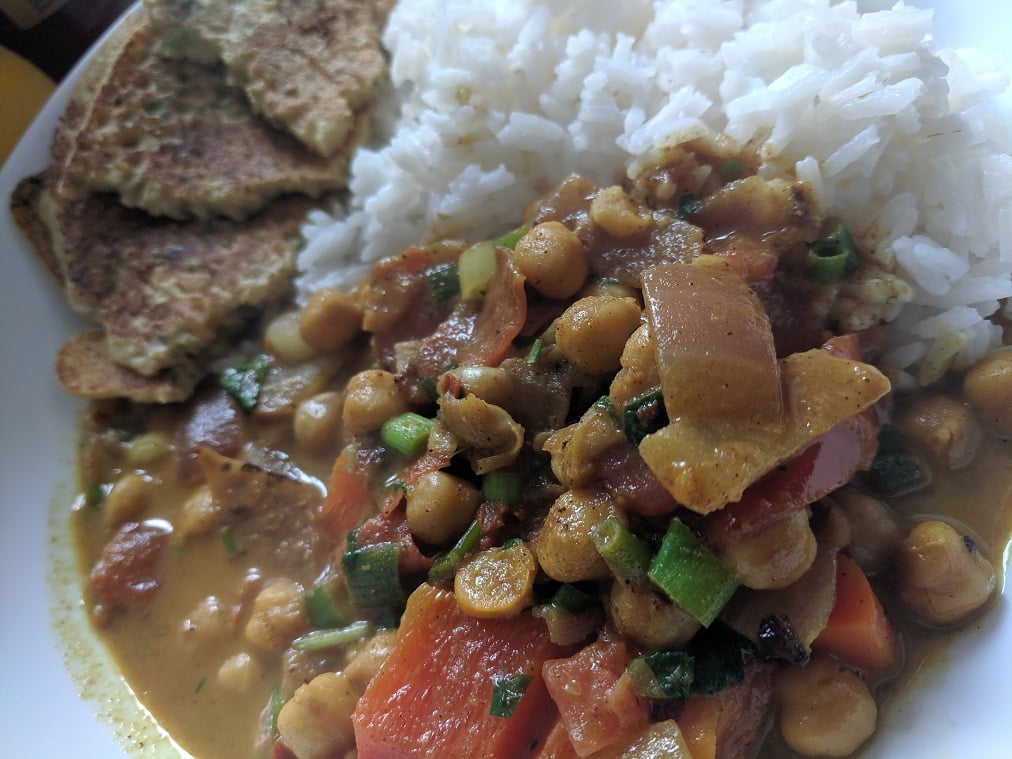
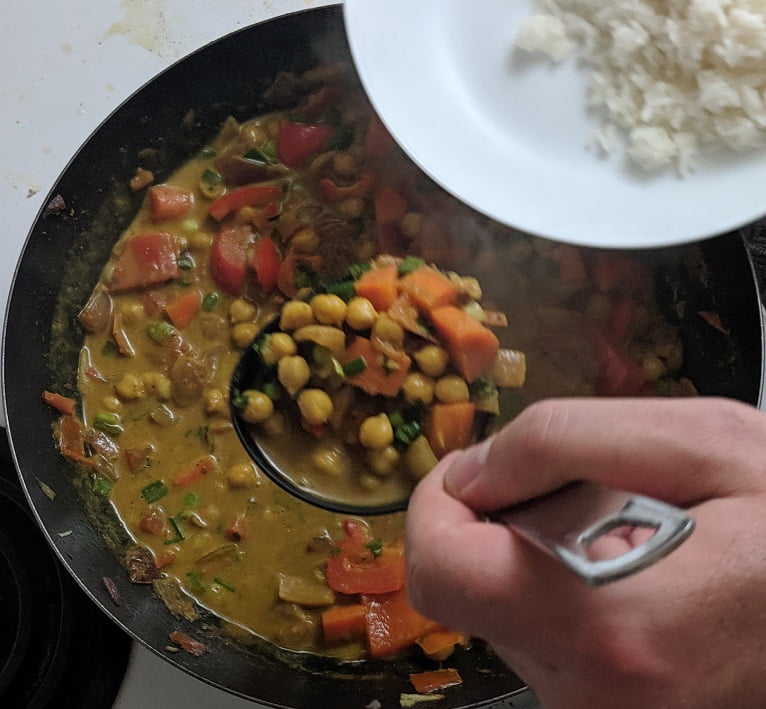
Chickpea Curry is a classic vegetarian dish that can be made in about a thousand different ways. It can be served as either a main course or as a side dish with other curries. And it is really, really tasty. This version of Chickpea Curry is made very quickly from scratch and still manages to have an intensely rich flavour.
This is a fairly mild curry as far as my tastes go but, some may find it spicy. You know yourself better than I do, so put only as much chili in as you are comfortable with. If you like it really spicy, put in more.
Recipe
Ingredients
- ½ ea Red Onion, diced
- 3 cloves Garlic, chopped
- 1 ea Red Bell pepper, diced
- 1 ea Carrot, diced
- 1 ea Tomato, diced
- 2 teaspoon Grated Giner
- 1 can Chickpeas
- 1 can Coconut milk
- 2 tablespoon Yellow Curry Powder
- 1 teaspoon Cumin
- 1 teaspoon Coriander
- 1-2 teaspoon Chili Flakes
- Salt and Pepper to taste
- Lemon Juice to taste
- 4 ea Green onions, chopped
- 2 tablespoon Chopped Cilantro
- 2 tablespoon Canola Oil
Instructions
- Heat a wok or large skillet over medium-high heat.
- Add the oil along with the onion and cook for two minutes.
- Add in the garlic and cook for one more minute.
- Next, add in the carrot and cook for an additional two minutes.
- Put the spices in the pan and cook, stirring for one-two minutes or until they become very aromatic.
- Put the tomatoes and peppers in the pan along with the ginger and cook for another two-three minutes.
- Drain the chickpeas and add those in along with the coconut milk.
- Bring to a boil then reduce the heat to medium and simmer for about ten minutes.
- Finish the curry with the green onions, cilantro, lemon juice, salt, and pepper.
- Serve with steamed rice and naan bread.
Frequently Asked Questions
What is the difference between curry powder and garam masala?
Curry powder is a British invention that typically includes turmeric, cumin, coriander, and other spices blended together. Garam masala is a more traditional Indian spice blend that usually contains cardamom, cinnamon, cloves, cumin, coriander, peppercorns, nutmeg, and bay leaves. Garam masala tends to have a more nuanced, aromatic flavour compared to the more uniform taste of curry powder.
Can I make curry without it being spicy?
Absolutely. The heat in curry comes primarily from chili peppers and cayenne, which are entirely optional. You can make a richly flavoured curry using spices like cumin, coriander, turmeric, and cardamom without adding any heat at all. Simply omit the chili peppers or reduce them to a pinch.
Why do curries use so much oil?
The fat in curry serves as a carrier for the spices. Many spice compounds are fat-soluble, meaning they dissolve in oil rather than water. Using a generous amount of oil ensures that the full flavour of the spices is extracted and distributed evenly throughout the dish. This is why curries that skimp on oil often taste flat.
Final Thoughts
Curry is one of those dishes that rewards curiosity and experimentation. Once you understand the basic structure -- aromatics, spices, liquid, and time -- you can create endless variations that suit your own palate. My chickpea curry recipe is a great starting point, but I encourage you to swap the protein, adjust the spices, and make it your own. That is where the real joy of cooking curry lives.


